
Neighborhood targeting works when a small business treats nearby customers as distinct communities with different needs, routines, and buying triggers. The goal is not to blanket a map with ads; it is to match message, offer, channel, and timing to the blocks, corridors, and micro-markets most likely to respond.
TL;DR for Local Area Targeting
- Define neighborhoods by customer behavior and access patterns, not only by ZIP code.
- Combine local data with what staff hear in-store, on calls, and in reviews.
- Use small tests by neighborhood before increasing media spend or opening new locations.
Draw the market the way customers experience it
Most small businesses start with a radius around their location. That is useful, but it can hide real buying patterns. A two-mile radius may include walkable apartment blocks, office commuters, school traffic, affluent homeowners, renters, industrial parks, and streets that customers avoid because of parking. Each pocket may need a different reason to visit.
Instead of starting with geography alone, map access. Where do people already pass your business? Which streets create natural boundaries? Which neighborhoods share schools, transit stops, offices, churches, gyms, clinics, or shopping trips? A neighborhood is often a routine before it is a boundary. That is why businesses that rely on foot traffic, delivery, service calls, or appointments should define target zones by behavior.
Pair field knowledge with credible data
Owner intuition is valuable, but it should be tested. The U.S. Census Bureau's Census Business Builder gives small businesses selected demographic and business statistics that can support decisions about opening, expanding, or marketing locally. The SBA's guidance on market research and competitive analysis also emphasizes combining market research with competitor understanding to find advantage.
Use these sources to ask better local questions. Are there enough households that match your core buyer? Are daytime workers more important than residents? Is the area saturated with similar businesses or underserved by a specific format? Data will not tell you the full story, but it can prevent expensive assumptions.
- Customer origin: where current buyers live, work, or travel from.
- Trip purpose: commute, errand, school run, appointment, leisure, or delivery need.
- Competitive pressure: nearby substitutes, pricing expectations, and service gaps.
- Local proof: reviews, referrals, community groups, and neighborhood events.
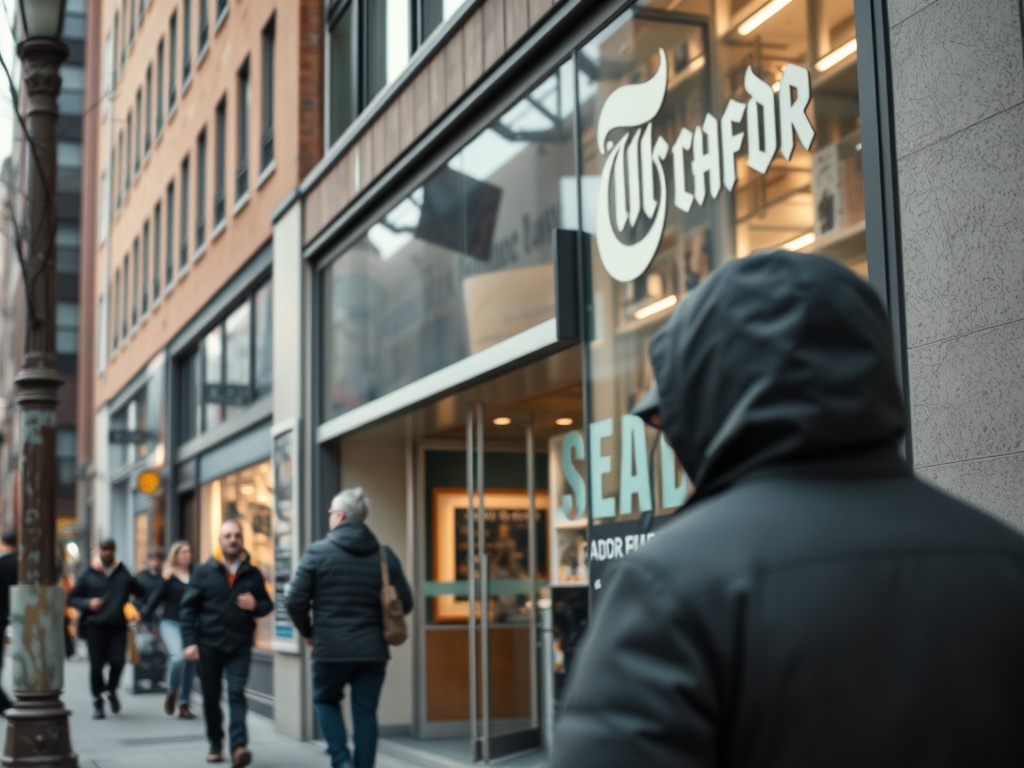
[Image Placeholder 1: Editorial Prompt provided after this article.]
Create neighborhood segments you can act on
A useful segment should change what you do. "People within five miles" is not actionable. "Parents near the school corridor who need fast weekday pickup" is actionable. "Office workers who buy lunch Tuesday through Thursday" is actionable. "New homeowners within service-call range" is actionable. Each segment should lead to a different offer, message, or operating choice.
For example, a cafe might test a commuter breakfast offer near a train station, a quiet afternoon work setup near apartment buildings, and a weekend family bundle near a park. A home-services company might target older housing stock with maintenance education, new developments with move-in inspections, and commercial corridors with recurring service plans. These choices can later connect to building an innovation process, because local experiments need structure if they are going to become repeatable learning.
Match channels to neighborhood behavior
| Neighborhood behavior | Likely channel | Message angle |
|---|---|---|
| Walk-by or drive-by discovery | Window signage, local search, map listings, street-level offers | Convenience, speed, and clear reason to stop now |
| Community recommendation | Local groups, referral cards, partnerships, review requests | Trust, local proof, and neighbor experience |
| Planned service purchase | Search ads, direct mail, educational pages, email | Problem clarity, process, timing, and proof of reliability |
| Event-driven demand | School calendars, local sponsorships, pop-ups, seasonal campaigns | Timeliness, usefulness, and limited local relevance |
Avoid spreading every message across every channel. A direct-mail postcard may work for homeowners but waste money on apartment renters. A sponsored community event may build trust for a service business but do little for a low-margin impulse product. A map listing update may outperform ads if customers mostly search "near me" at the point of need.
Build offers around local moments
Neighborhood targeting gets stronger when it connects to moments. A dry cleaner can plan around school events, office returns, weddings, and seasonal storage. A repair company can plan around weather, property age, and maintenance cycles. A wellness studio can plan around commuter routines and local employer schedules. The same offer can feel generic in one neighborhood and highly relevant in another.
Use cautious language in promotions. Do not make claims about neighborhoods that rely on stereotypes or assumptions. Focus on observable needs, not personal attributes. For example, "weekday pickup for busy school corridors" is safer and more useful than broad claims about family identity or income. Good local marketing respects communities while still being specific.
Test one zone at a time
- Choose one neighborhood segment and one customer action, such as calls, visits, bookings, or redemptions.
- Set a baseline using recent sales, inquiries, traffic, or local search data.
- Run one tailored message for two to four weeks, keeping the rest of the campaign stable.
- Compare results against a similar control zone when possible.
- Keep the learning in a simple local playbook so future campaigns improve rather than restart.
The local growth move to make next
How to avoid over-targeting
Neighborhood targeting should never become intrusive. Use aggregated patterns, customer behavior, and volunteered information rather than sensitive assumptions. The more specific the campaign, the more carefully the business should review wording for fairness and respect. A local campaign can feel personal without implying that the company knows private details about residents.
A practical safeguard is to write every message around a situation rather than a personal attribute. "Quick lunch near the courthouse" is situation-based. "Affordable service for busy move-in week" is situation-based. These messages can still be highly local, but they avoid stereotyping the people who live or work nearby.
This approach also helps with staffing and inventory. If a campaign is expected to bring more demand from a specific corridor or block group, managers can adjust hours, delivery windows, product mix, or appointment capacity before the promotion starts. Targeting is strongest when marketing and operations move together.
Pick one neighborhood where you already have proof of demand, then make the next campaign more specific to that area's routines. Small businesses do not need huge datasets to improve local targeting. They need a clean map of customer behavior, a few reliable data points, and the discipline to test before scaling. If supplier choices or product availability affect what you can promise locally, review supplier sustainability checklist basics as part of your operating plan.