When You May Need Hospital-Based Oral Surgery Instead of Office Care
Article ID 277 | Cluster: Oral Surgery & Extractions | Content Type: Comparison | Funnel Stage: Middle of Funnel
Most oral surgery is done safely in an office setting, but some patients and procedures are better served in a hospital or ambulatory surgery center. The main question is not which location sounds more advanced. It is which setting offers the safest mix of airway support, medical backup, anesthesia resources, and post-operative monitoring for your situation.
Key Takeaways for Hospital-Based Oral Surgery Instead Office Care
- For Hospital-Based Oral Surgery Instead Office Care, review the diagnosis, patient goal, treatment limits, and maintenance burden before the next appointment is booked, then confirm the difference between temporary support, definitive care, routine questions, and urgent signs when the diagnosis is confirmed before this choice is recorded.
- Hospital-based care may be preferred when medical complexity, airway concerns, severe infection, major reconstruction, or deep anesthesia needs raise the risk.
- The location decision is about safety and coordination, not status.
- Escalating swelling, trouble swallowing, fever, or breathing concerns need urgent assessment.
How the two settings differ
An office-based procedure is usually designed for efficiency and familiarity. For many healthy patients needing standard dentoalveolar surgery, that can be entirely appropriate. Hospital-based oral surgery adds access to broader medical resources, operating-room support, and a setting built for patients who may need more advanced anesthesia management or multi-specialty coordination.
Comparing Options for Hospital-Based Oral Surgery Instead Office Care
| Question | Office care may fit when | Hospital-based care may fit when |
|---|---|---|
| Medical history | Overall health is stable | Significant medical issues need closer support |
| Airway/anesthesia | Sedation plan is straightforward | Airway concerns or deeper anesthesia raise complexity |
| Procedure scope | The surgery is limited and routine | Infection, trauma, reconstruction, or extensive surgery is involved |
| Coordination | Dentist or surgeon can manage directly | Multiple specialties may need to coordinate care |
Who often needs the hospital setting
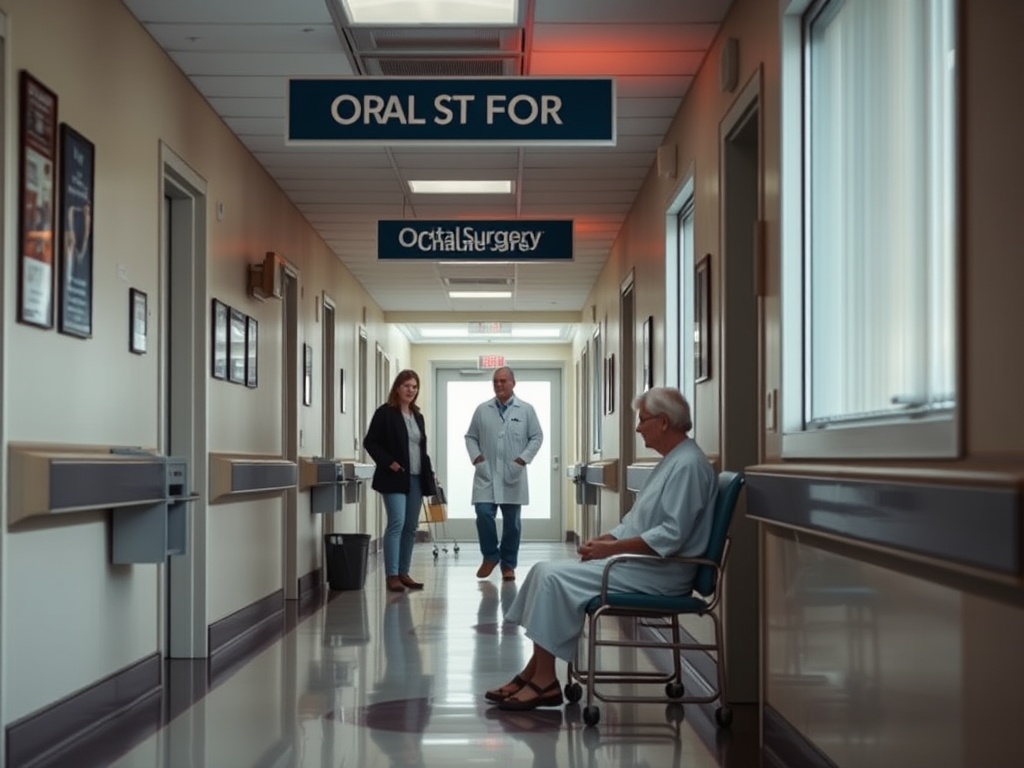
Patients with significant heart or lung disease, complex medication issues, major developmental or behavioral needs, severe facial swelling, trauma, extensive infections, or procedures expected to be long and complex may be steered toward a hospital-based plan. The same can apply when a surgeon anticipates the need for a protected airway, imaging, overnight observation, or same-day consultation from other services.
Why cost and convenience should not drive the whole decision
An office procedure may be simpler logistically. A hospital case can mean more scheduling layers, more paperwork, and sometimes a different cost structure. Even so, convenience should not override the safety profile. The “best” setting is the one in which the team can manage the most likely complication without stretching the environment past what it is built to do.
For supporting context on When You May Need Hospital-Based Oral Surgery Instead of Office Care, review Teeth in a Day: Myth, Marketing Term, or Real Treatment Path?. Then compare the linked guidance with the examination findings for When You May Need Hospital-Based Oral Surgery Instead of Office Care before treatment is scheduled, and ask which details do not apply to the current case.
Planning Notes for Hospital-Based Oral Surgery Instead Office Care
For supporting context on When You May Need Hospital-Based Oral Surgery Instead of Office Care, review Questions to Ask Before Booking a Sedation Dentistry Consultation. Then compare the linked guidance with the examination findings for When You May Need Hospital-Based Oral Surgery Instead of Office Care when maintenance is discussed, and ask which details do not apply to the current case.
Before a second opinion or consultation, think through four points:1. How medically complex am I on an ordinary day?2. Has the surgeon mentioned airway, infection spread, or bleeding concerns?3. Am I being offered deep sedation or general anesthesia, and where is that safest for me?4. Would another specialist need to be involved the same day?
If several answers point to complexity, a hospital recommendation is not overkill. It often means the surgeon is planning responsibly.
Home Care and Follow-Up for When You May Need Hospital-Based Oral Surgery Instead of Office Care
A routine consult is appropriate when you are comparing locations for a planned extraction, implant case, jaw correction, or sedation plan. Seek urgent help right away if swelling is spreading, you have trouble swallowing or breathing, you cannot keep fluids down, or an infection seems to be worsening rapidly. In those situations, the location question can become an emergency triage question.
How the decision usually gets made
Hospital-based oral surgery is not automatically “better,” and office-based surgery is not automatically “less safe.” Each has a role. What matters is whether your health status, anesthesia needs, and procedure complexity fit the setting. A thoughtful surgeon chooses the environment that can handle your case comfortably if everything goes as planned and if it does not.
Questions About Hospital-Based Oral Surgery Instead Office Care
For Hospital-Based Oral Surgery Instead Office Care, this part of Questions About Hospital-Based Oral Surgery Instead Office Care focuses on the symptom history, previous treatment, current medicines, and the result the patient values most while risks and alternatives are compared, with the same details verified when the diagnosis is confirmed. The clinician should also explain which examination finding supports each recommendation and what information could change it for Hospital-Based Oral Surgery Instead Office Care when the diagnosis is confirmed, using the examination and health history rather than a general assumption. Recording that explanation gives the patient a clearer next step for Hospital-Based Oral Surgery Instead Office Care while risks and alternatives are compared, especially when follow-up duties are reviewed when the diagnosis is confirmed.
Clinical Checks for Hospital-Based Oral Surgery Instead Office Care
For Hospital-Based Oral Surgery Instead Office Care, this part of Clinical Checks for Hospital-Based Oral Surgery Instead Office Care focuses on confirmed findings, measurements, imaging, and health-history factors when home-care instructions are prepared, with the same details verified when the diagnosis is confirmed. The clinician should also explain what remains uncertain and whether another test or specialist opinion would alter the plan for Hospital-Based Oral Surgery Instead Office Care when maintenance is discussed, using the examination and health history rather than a general assumption. Recording that explanation gives the patient a clearer next step for Hospital-Based Oral Surgery Instead Office Care when home-care instructions are prepared, especially when follow-up duties are reviewed when the diagnosis is confirmed.
Timing and Recovery for Hospital-Based Oral Surgery Instead Office Care
Planning When You May Need Hospital-Based Oral Surgery Instead of Office Care also means discussing effects on work, school, travel, eating, driving, exercise, and caregiving responsibilities. Before scheduling When You May Need Hospital-Based Oral Surgery Instead of Office Care, ask how delays, missed visits, or slower healing could change comfort, cost, and the final result before consent is finalized. The timeline for When You May Need Hospital-Based Oral Surgery Instead of Office Care should include diagnosis, preparation, treatment, healing, adjustment, and maintenance rather than only the main appointment.
A smart follow-up move
ask the surgeon why they are recommending that location specifically for you, and have them explain what risks the setting choice is meant to reduce.
What to expect if the surgeon recommends the hospital
A hospital recommendation usually comes with more pre-op coordination. You may need medical clearance, a medication review, updated imaging, or a discussion about fasting and post-op observation. That extra preparation can feel heavier than an office booking, but it usually reflects a safer attempt to control variables before the procedure rather than a sign that something has gone wrong.
Sources for Hospital-Based Oral Surgery Instead Office Care