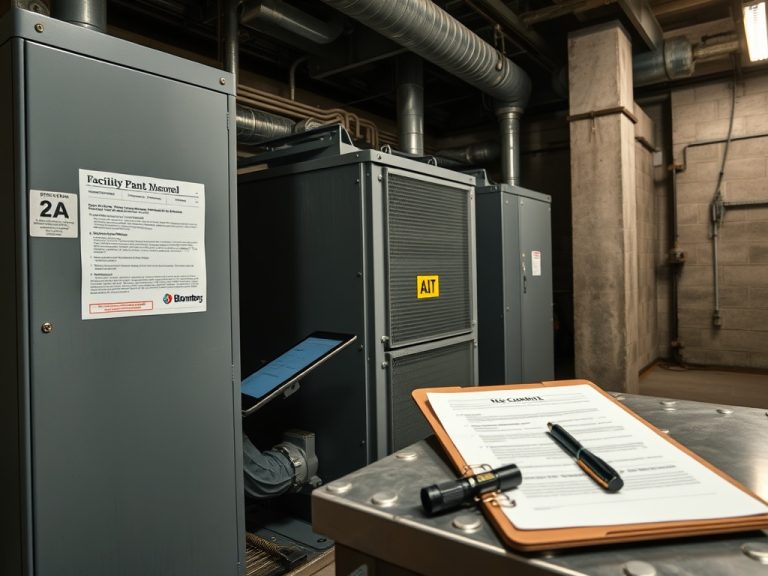
Facility managers usually ask the same core questions about aging buildings: what is unsafe, what is merely worn, which systems should be prioritized, and how to plan repairs without disrupting occupants. Good answers come from condition data, maintenance history, code context, indoor-environment concerns, and capital planning, not from age alone.
Aging Building Question Map: Separate safety issues from service-life issues, inspect critical systems first, connect comfort complaints with operations data, and turn recurring repairs into a prioritized capital plan. This content is informational and does not replace professional engineering, environmental, code, legal, or project-management advice.
Question 1: Is the building unsafe, or just past its prime?
Age by itself does not prove a building is unsafe. Many older buildings perform well when maintained, while newer buildings can have serious defects. Facility managers should distinguish visible wear from risk indicators. Peeling finishes, dated fixtures, and cosmetic damage may affect perception, but structural movement, water intrusion, fire-life-safety deficiencies, electrical hazards, failing guardrails, or compromised mechanical systems require more urgent review.
The practical first step is a condition walk that records defects by severity, affected system, location, and operational impact. Photos help, but they should be paired with notes that explain what was observed and whether the issue is active, recurring, or historical. For older properties, a clear facility asset register gives managers a place to connect those observations to actual equipment, warranties, service history, and replacement planning.
Question 2: Which systems deserve attention first?
Priority should follow risk, not visibility. A faded lobby may be annoying, but a leaking roof above electrical equipment, an unreliable fire pump, or a failing air-handling unit serving critical areas may deserve earlier attention. Facility managers often group aging-building concerns into life safety, water control, structure, electrical distribution, HVAC, plumbing, vertical transportation, envelope, accessibility, and finishes.
| Question to ask | Why it matters | Useful evidence |
|---|---|---|
| Could this condition affect occupant safety? | Safety issues require faster escalation | Inspection reports, incident records, code review |
| Is the defect causing repeat work orders? | Repetition may signal a deeper failure mode | CMMS history, technician notes, photos |
| Is the system near practical end of service? | Planning reduces emergency decisions | Age, condition, parts availability, maintenance cost trend |
| Does the issue affect energy or comfort? | Aging systems can create operating and tenant concerns | Utility data, BAS trends, complaints, IAQ records |
The U.S. Department of Energy notes that retrofit, renovation, and refurbishment can improve energy performance in existing commercial buildings. Its retrofit existing buildings resource is a useful starting point for understanding why aging-building decisions often combine maintenance, energy, and tenant-experience goals.
Question 3: Are comfort complaints an IAQ issue or an operations issue?
Comfort complaints are common in older buildings, but they can come from many sources: ventilation, humidity, controls, envelope leakage, zoning, dirty coils, blocked diffusers, occupant density, housekeeping practices, or moisture problems. The EPA and NIOSH Building Air Quality guide provides practical suggestions for preventing, identifying, and resolving IAQ problems in public and commercial buildings through the EPA's building air quality guide.
The key is not to jump to a single cause. Facility managers should compare complaints by location, time of day, weather, system schedule, and recent work. If several occupants report issues near the same air-handling zone, the investigation differs from a single complaint near a drafty entrance. Field tablets can help teams capture photos, sensor readings, occupant notes, and work orders consistently, which is why rugged devices and connectivity setups matter in older facilities.
Question 4: Should we repair, replace, or retrofit?
Repair makes sense when the issue is isolated, parts are available, the system still supports the building's needs, and the repair does not hide a larger risk. Replacement may be more appropriate when failures repeat, parts are difficult to obtain, performance no longer meets requirements, or maintenance access is poor. Retrofit sits between the two: it upgrades performance or function without replacing everything.
ASHRAE Standard 180 establishes minimum HVAC inspection and maintenance requirements intended to preserve thermal comfort, energy efficiency, and indoor air quality in new and existing commercial buildings. The ASHRAE overview of Standards 180 and 211 is useful for managers thinking about systematic inspection, maintenance, and energy-audit processes.
Owners should also avoid treating every retrofit as automatically beneficial. The right choice depends on building use, code requirements, budget, occupant disruption, climate, system compatibility, and long-term maintenance capacity. A poor retrofit can shift problems rather than solve them.
Question 5: What should be checked below the obvious problem?
Aging-building problems often show symptoms far from the cause. A cracked floor finish may reflect substrate movement, moisture, heavy traffic, or installation issues. A recurring door problem may come from frame movement, humidity, hardware wear, or settlement. A leak may start above, beside, or far from the stain.
When the issue may connect to foundations, slabs, or drainage, managers should document conditions and bring in the right technical support before assumptions harden into expensive fixes. The same disciplined thinking applies before new work begins, including topics such as soil compaction before foundation work.
What not to assume from building age alone
Facility managers should avoid two opposite assumptions. The first is assuming that an old building is automatically failing. The second is assuming that long service means a system can keep running without closer review. Age is a signal to investigate, not a diagnosis. A well-maintained older chiller, roof, or switchboard may have clearer records and more predictable behavior than a newer system with poor commissioning or undocumented repairs. Use age to set inspection frequency, ask better questions, and plan renewal scenarios, but let observed condition and risk drive the actual priority. This keeps planning practical instead of reactive or cosmetic.
Questions to bring to the next walkthrough
- Which defects have safety, code, or access implications?
- Which systems generate the most repeat work orders?
- Where do water, humidity, or envelope issues appear?
- Which parts are becoming hard to source?
- Which repairs are being repeated without a root-cause review?
- What information is missing from asset records?
- Which upgrades would reduce disruption later if grouped together?
Turn aging-building questions into a capital plan
The best aging-building conversations end with ranked actions, not vague worry. Create a condition log, tie defects to assets, separate immediate hazards from planned repairs, and revisit priorities after each inspection cycle. That turns age into manageable information and helps owners fund the right work at the right time.