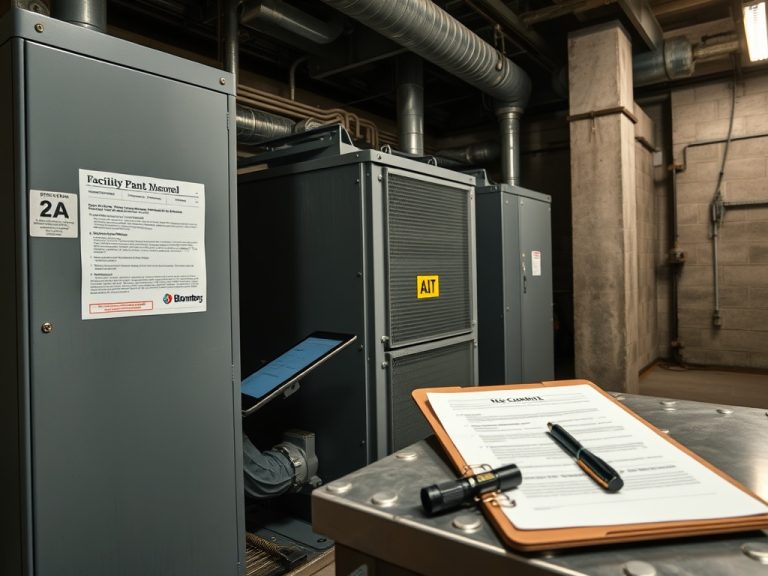
Root cause analysis stops repeat equipment failures by shifting maintenance from repeated repair to disciplined investigation and corrective action. Instead of asking only what broke, the team asks why it broke, what conditions allowed it to break again, and what change would reduce recurrence.
Repeat Failure Investigation Snapshot: Define the failure, collect facts, map causes, verify the most likely root causes, assign corrective actions, and check whether the failure pattern actually changes. This article is educational only and is not engineering, safety, legal, compliance, or reliability-consulting advice.
Stop treating every breakdown as a one-off
Repeat failures often hide inside normal maintenance activity. A belt is replaced again. A pump seal leaks again. A breaker trips again. A rooftop unit alarms again. If each event is closed as a separate repair, the maintenance team may never address the condition that keeps bringing the asset down.
Root cause analysis, or RCA, is most useful when the failure has consequence: safety risk, occupant disruption, repeated labor, emergency response, warranty conflict, production impact, or unclear cause. Not every minor repair needs a formal investigation. The key is to define triggers for when the team stops fixing symptoms and starts investigating patterns.
This is where service records matter. A technician's notes, parts used, photos, alarm history, and asset data can show whether a failure is isolated or recurring. A stocked truck helps crews respond, but recurring failures should also feed back into the system. That links RCA with service truck stocking decisions.
Define the failure before asking why
A vague problem statement leads to vague causes. "Pump failed" is weaker than "chilled water pump P-2 tripped on overload three times during afternoon peak load after bearing replacement." The second statement creates a clearer path for evidence gathering.
Good RCA starts with facts: asset ID, service history, operating conditions, recent work, control trends, alarms, environment, photos, parts condition, technician observations, and any temporary fixes already attempted. OSHA's incident-investigation guidance emphasizes going beyond the immediate factor to identify underlying causes that allow events to recur. Its fact sheet on root cause analysis during incident investigation is safety-focused, but the systems thinking applies well to maintenance failures too.
Choose the tool that fits the problem
| RCA tool | Best use | Watch-out |
|---|---|---|
| 5 Whys | Simple cause-and-effect chains | Can become too linear if multiple causes exist |
| Fishbone diagram | Brainstorming people, methods, machines, materials, environment, and measurement factors | Needs evidence after brainstorming |
| Fault tree | Technical failures with logical branches | Can become complex without expert support |
| Pareto review | Ranking repeated failure categories | Requires reliable coding and data |
| Failure mode review | Equipment with known modes and effects | Needs asset-specific technical knowledge |
ASQ describes cause-analysis tools such as fishbone diagrams, Pareto charts, and scatter diagrams as helpful for conducting RCA. Its root cause analysis tools resource is a useful overview for teams selecting a method.
Turn causes into corrective actions
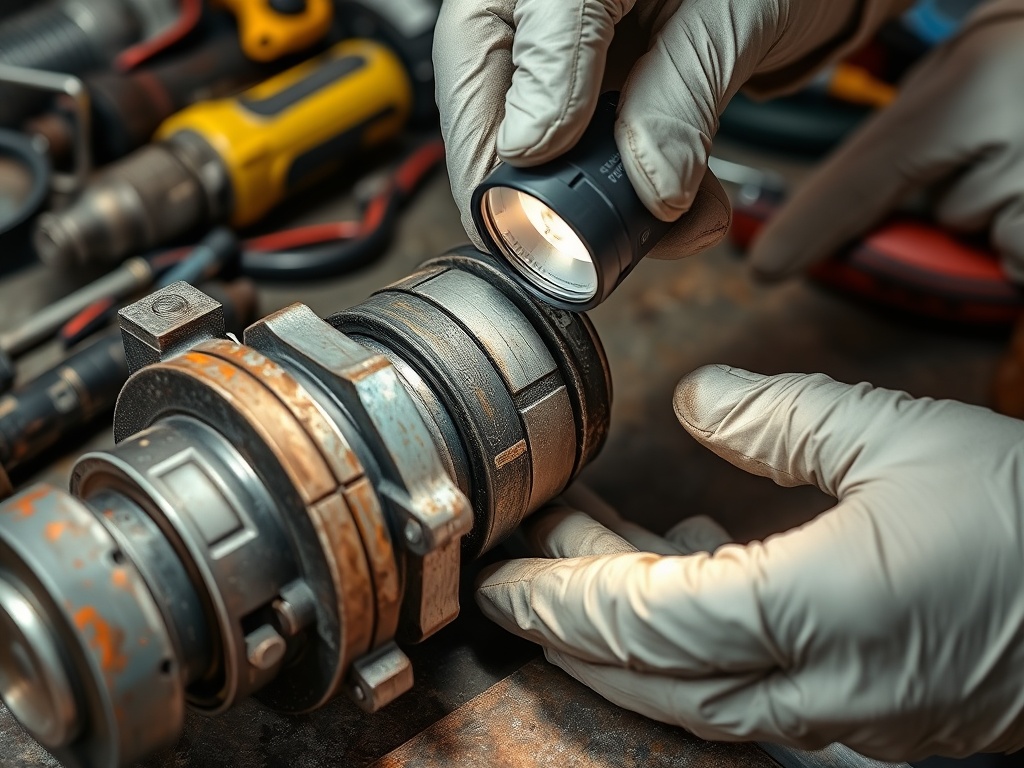
The difference between a useful RCA and a meeting summary is corrective action. A corrective action should address the verified cause, name an owner, define completion evidence, and include a follow-up check. Replacing the same component may be necessary to restore service, but it is not a root-cause corrective action if the underlying driver remains.
Examples of stronger corrective actions include changing a PM task, correcting alignment, revising installation details, improving filtration, updating operating sequences, replacing an incompatible part, training technicians on a recurring error, changing storage conditions, or escalating design review. Outcomes remain context-dependent, and no action should be described as guaranteed without evidence.
NASA's preferred practice for problem reporting and corrective action systems describes a closed-loop system that collects, analyzes, records failures, determines root cause, and establishes corrective action to help prevent recurrence. The NASA PRACAS practice is a strong reference for why failure reporting and corrective action should stay connected.
Mistakes that weaken RCA
The first mistake is blame. RCA should examine systems, conditions, information, materials, training, access, and design, not simply name a person. The second mistake is stopping at the first plausible cause. The third is poor evidence. If no one records operating conditions, parts condition, or recent changes, the investigation becomes opinion-heavy.
Another mistake is ignoring external conditions. Soil movement, water intrusion, power quality, ventilation, cleaning practices, and usage changes can contribute to equipment stress. Maintenance teams do not need to solve every building issue alone, but they should know when a recurring equipment problem points beyond the equipment. Early construction records, including soil compaction documentation, can sometimes help when building movement or drainage is part of the question.
Build RCA into daily maintenance management
RCA does not have to be a large formal event. A small facility can use a simple trigger: three similar failures, one high-impact failure, one safety-significant event, or one failure with unclear cause. The team can then hold a short review, attach evidence to the work order, assign an action, and check results later.
Owners should also consider how estimates and scopes handle corrective work. If a contractor proposes replacing equipment after repeated failures, the owner should ask whether the estimate addresses the failure mechanism or only the visible damage. That makes RCA thinking useful when reviewing a contractor's estimate.
Improve failure codes before expecting better answers
RCA depends on the quality of everyday data. If technicians can only choose vague failure codes such as "broken" or "other," the maintenance history will not reveal useful patterns. Better codes should separate symptom, component, apparent cause, corrective action, and follow-up need. Short note standards also help: ask technicians to record what they observed, what they tested, what they changed, and what condition remained. This makes the next investigation faster and reduces the chance that each technician starts from zero.
Failure-prevention loop for maintenance teams
- Set RCA triggers for repeat or high-impact failures.
- Write a specific problem statement.
- Collect evidence before parts are discarded.
- Map possible causes and verify the most likely ones.
- Assign corrective actions with owners and due dates.
- Update PM tasks, asset records, and technician notes.
- Check whether the failure pattern changes.
Close the loop before the next failure
Root cause analysis is not about producing a perfect diagram. It is about making repeat failures less likely through better evidence and better follow-through. Start with one recurring asset, document the next failure carefully, and test whether a closed-loop corrective action changes the pattern.